
How to keep AI writing in your brand voice across tools
ChatGPT, Claude, Gemini, Jasper and your own agents each bring their own defaults, settings and copy of your guide, so one voice comes out several ways. Write the voice in the parts that carry across models, keep one version every tool reads, and check the same tasks in each tool.
TL;DR
Keep one maintained voice guide that every tool retrieves for the task. Write concrete choices, exact terms, situational tone and examples with reasons. Compare the same tasks across your tools, using the guidance each received to distinguish unclear rules, missing context and model-specific mistakes.
One voice, several versions
The same guide can produce different drafts. Check four causes:
| Cause | What to inspect |
|---|---|
| Model defaults | OpenAI and Anthropic document different length/formatting defaults |
| Vague labels | What “warm” or “concise” actually asks the writer to do |
| Personal settings | ChatGPT style, instructions and memory; Claude’s personal instructions |
| Old model fixes | Rules that overcorrect on a newer model, as Anthropic describes for Fable 5.1 |
A guide copied into projects, Gems and rules files also needs replacing in each place after changes. Shared guidelines covers those copies.
What carries across models
Write choices someone can check:
| Instead of | Specify |
|---|---|
| Be concise | Length or structure for the situation |
| Friendly but professional | Forms of address, greetings and punctuation |
| Use our terms | Exact names beside rejected spellings/synonyms |
| Be witty | Where humour belongs, with approved/rejected examples |
| Never use bullets | The structure approved emails should use |
Explain why a rule helps the reader. Keep tone tied to the situation; Atlassian, Shopify and Monzo’s writing guidance shows how.
Use a small, varied set of examples, each near-miss paired with its rewrite and reason. OpenAI recommends varied inputs and intended outputs; Google advises consistent formatting and testing the number of examples.
Keep model-specific fixes outside the shared brand. Writing the voice guide covers the full structure.
Keep one voice every tool reads
Rainbrand maintains voice alongside the brand’s identity and assets. Add the guide as a document or written direction, or add it later through an edit.
Connect Claude or ChatGPT, or follow the MCP quickstart for another agent. Once the brand is ready, request a Brief for the task’s guidance; the agent writes with its own model. Keep each Brief with its draft.
For [your brand] writing, request a Brief from Rainbrand for the task before drafting, and follow its voice guidance. If a style, tone or personality setting here disagrees with the Brief, follow the Brief and tell me what differed.Remove stale brand text from personal instructions and memories. Claude Team/Enterprise organization instructions can hold the retrieval instruction, but changes can take time and conflicting instructions still need testing.
After a brand change, inspect and apply the edit, then request a fresh Brief. Replace exported Brand Skills and other saved copies yourself.
See how a voice rule shapes a real task
For Son of a Tailor, a clothing brand, Codex made a cotton guide and care insert. Rainbrand’s Brief called for calm confidence, compact garment-grounded explanations and tangible qualities. The guide opens:
The feel of a T-shirt starts with the fabric. A little more weight changes how it falls, how it holds its shape, and how it feels on you.
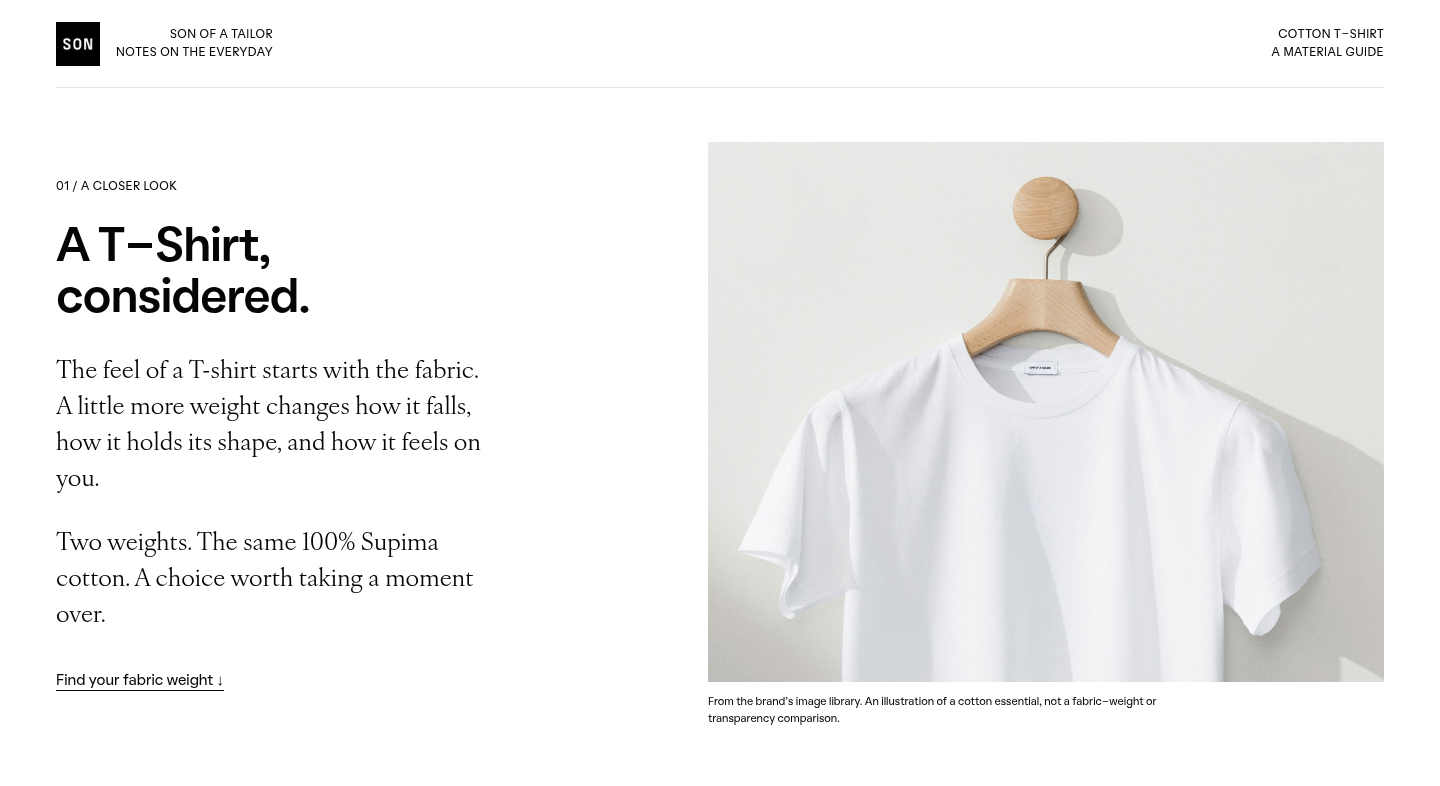
The copy explains fabric and wear instead of inflated quality claims. The Brief separately directed product-fact checks to the product page: sounding right did not settle whether a claim was supported.
Check the same task in every tool
- Choose five to ten real tasks across situations.
- Run each with the same captured guidance; note tool, model and date.
- Check names, limits and punctuation directly.
- Judge voice against individual rules with examples.
- Diagnose misses before changing the guide: unclear source, missing handoff or ignored instruction.
- Repeat after model, tool or voice changes.
Task:             [situation and request]
Voice version:    [Brief or guide version]
Tool and model:   [assistant, model name, date]
Countable rules:  [limit, names, avoided words, punctuation, formatting]: pass or fail
Judgement rules:  [rule]: pass, fail or unsure, with the line it applies to
Pattern:          [what this tool does that the others don't]
Fix:              [the change to the shared voice, or a note for this tool only]
For a Rainbrand workflow, compare drafts with their Briefs:
Here are drafts of the same task from several AI tools, each labelled with its tool and model, together with the Rainbrand Brief each received. Using the supplied brand voice rules, mark every draft pass, fail or unsure for each rule and quote the relevant line. For each miss, distinguish ambiguous source guidance, missing context and failure to apply a clear rule. Recommend a change to the shared guidance, the task handoff or that model's instructions according to the evidence. If the cause is unclear, say what to inspect next. Don’t rewrite the drafts.Keep original text for this grading. For Rainbrand Review, submit the rendered email, page or post with expected copy and constraints; its findings guide revisions of that captured work.
Which tools keep AI writing on voice?
| Tool | Where it applies | Access/detail that matters |
|---|---|---|
| Jasper | Brand Voice and Style Guide, plus connected assistants | Style Guide and MCP/API access are Business features |
| WRITER | Existing voice/style settings; Enterprise Brain across WRITER Agent sessions | Standard MCP runs playbooks; direct Brain guidelines/assets access is very early access through an account team |
| Grammarly Brand Tones | Feedback while people write | A check after text exists |
| Rainbrand | Guidance retrieved by connected agents and products | Your agents write and revise; keep the voice checks above |
The Jasper and Writer comparisons cover the buying decisions. For several assistants, keep the voice where all can retrieve it.
If you’re building the agent
- Fetch a task Brief through Rainbrand’s API; runtime retrieval covers caching.
- Pin the model release and test before upgrading. OpenAI notes that snapshots can produce different results.
- Keep model adjustments with model configuration, separate from brand rules. GPT-5.6’s text.verbosity setting controls default length; prompts can set task-specific length.
- Rerun the same voice checks after changes.
More in Brand voice
3 min read
Brand voice examples, and how to write rules AI can follow
Learn from seven published voice guides, then turn their useful habits into rules, examples and tone instructions for your own agents.
6 min read
How to write brand voice guidelines AI tools can follow
Build a voice guide from real edits, with rules, examples, tone by situation and a worksheet you can test on your agents' writing tasks.